
Heart rate & skin temperature
The industrial watch continuously monitors heart rate and skin-temperature changes, helping detect signs of heat stress, hypothermia or physical distress, and can trigger alerts via platform rules.
4G helmet tracker module · geofencing & roll call · industrial BLE watch/band · heart rate & skin temperature · 4G gateway cloud
Industrial BLE watch/band with heart rate, skin temperature, SOS, fall detection and 4G-gateway cloud alerts — built for confined-space, high-risk work. On the helmet, a 25 g tracker module adds indoor/outdoor positioning over 4G, with geofence alerts and roll call on the New Forward SSSS platform.
Download datasheet (PDF)
- The module reports straight to the cloud over low-power 4G Cat.1; outdoors it combines GPS/BeiDou with Wi-Fi and cell-tower positioning, and in basements, tunnels and other indoor areas it scans pre-installed Bluetooth beacons (BLE 5.1, with AOA support).
- UWB and LoRa versions are also available, chosen to suit the site network and the accuracy needed.
- As reference figures, satellite positioning is about 5–20 m in open outdoor conditions and beacon positioning about 1–3 m with beacons spaced roughly 6–8 m apart; actual accuracy depends on the environment, obstructions and beacon layout.
- Once connected to the New Forward SSSS smart site-safety platform, polygon geofences can be drawn on the map, with entry alerts for danger zones and exit alerts for the site pushed to the web and mobile, plus time-window roll calls with Excel export and history-track playback; the connection method and available functions are confirmed by New Forward per model, firmware version and project.
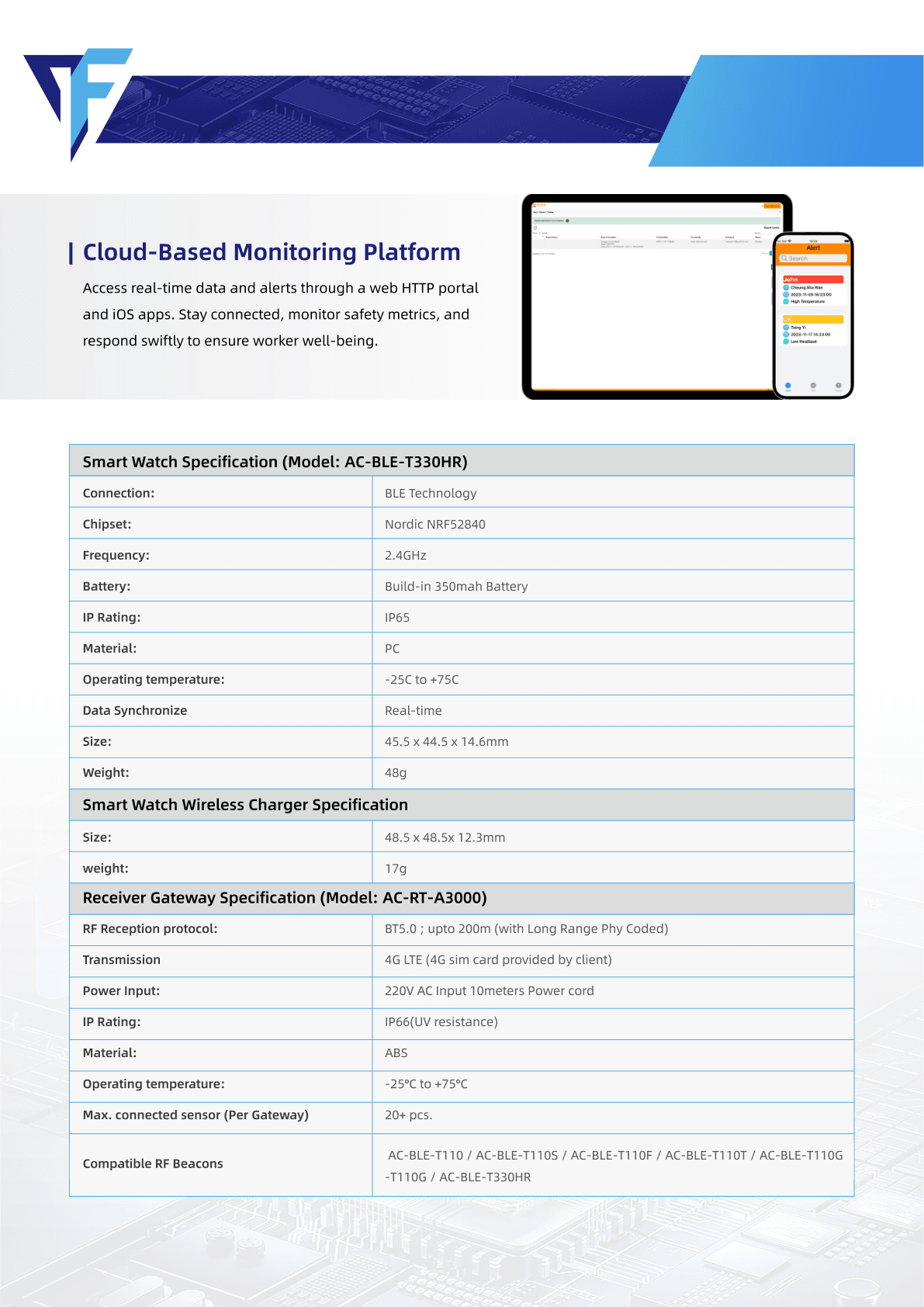
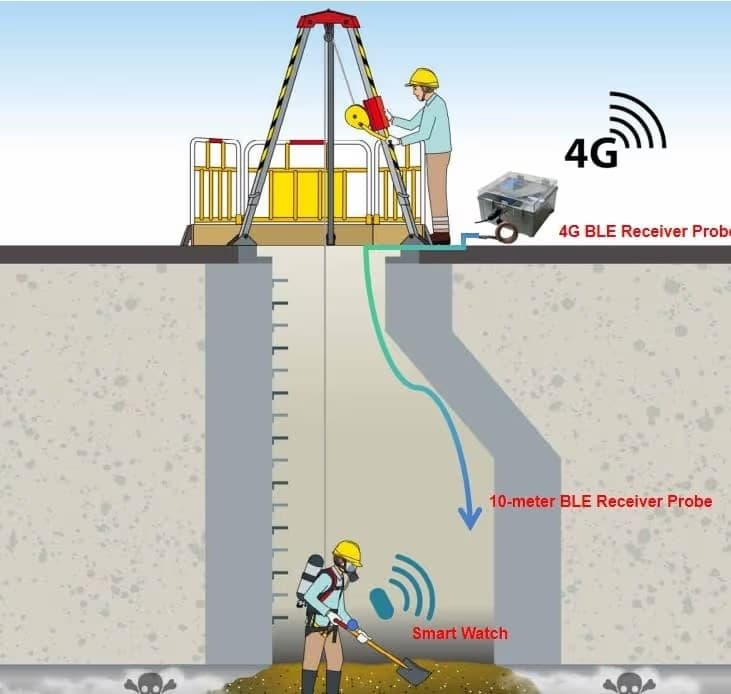
- On site, an industrial receiving gateway aggregates the wearable signals: it supports Bluetooth 5.0 long-range reception (up to roughly 200 m in open conditions, subject to obstacles and interference), uplinks over 4G LTE (customer-supplied SIM) on 220 V power, and a single unit connects 20+ wireless sensor nodes — manageable alongside other RF beacons and sensors under one architecture.
- The cloud monitoring interface is accessible through a web (HTTP) portal and mobile apps such as iOS, showing live data and alerts (e.g.
- abnormal body temperature or heart rate) to shorten rescue and work-stoppage decisions.
- Beyond general site-personnel management, the wearables are especially suited to underground drains, manholes, chambers and other enclosed or semi-enclosed work, continuously reporting vital signs and pushing alerts on anomalies to reduce the risk of heat stroke, thermal dysregulation and sudden illness.
- The platform can also be extended per project with APIs, geofencing and integration with existing safety-management platforms.
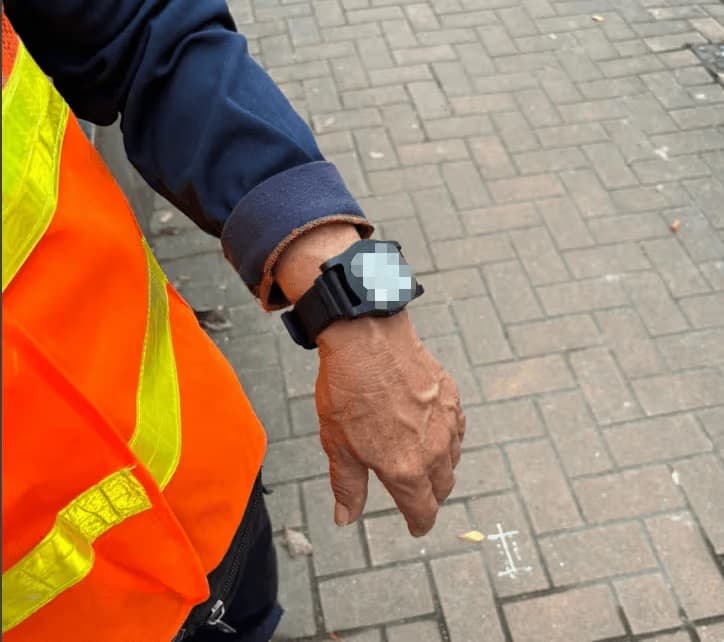
The industrial watch continuously monitors heart rate and skin-temperature changes, helping detect signs of heat stress, hypothermia or physical distress, and can trigger alerts via platform rules.
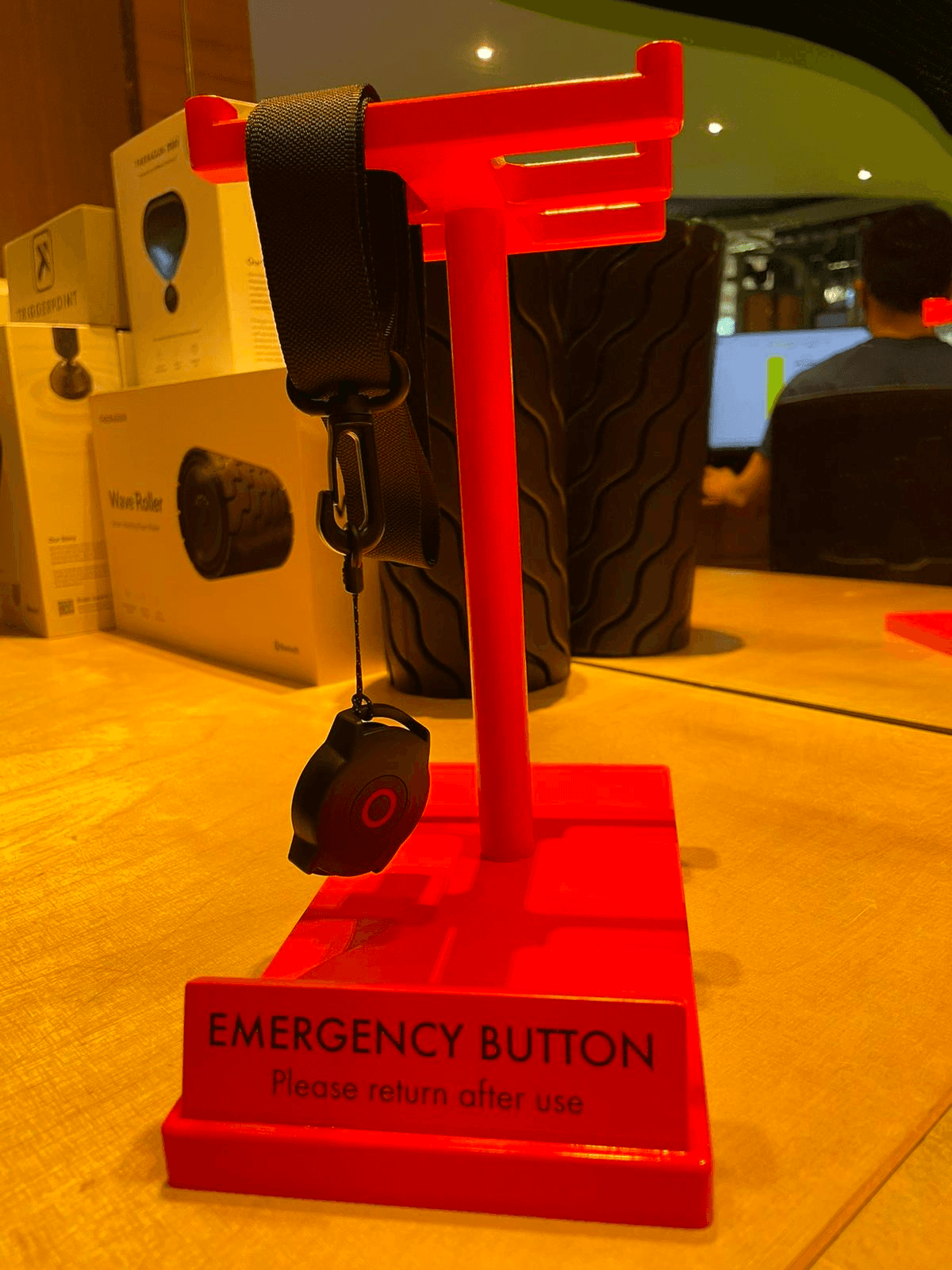
One-touch distress calls notify the management centre through the system; an LED shows emergency status so colleagues and on-site personnel notice immediately.
Built-in G-force sensing detects falls or preset impact conditions and triggers alerts, strengthening safety for lone working and confined spaces.
The smart helmet can integrate two-way voice, location and site-safety workflows, bringing helmet and wrist-wearable data into the same monitoring architecture.
The watch communicates with the gateway via BLE / iBeacon compatibility; the gateway supports BT5.0 long-range reception and 4G cloud uplink, aggregating multiple frontline devices per unit and reducing on-site cabling.
Managers view live status and alert lists through a web portal and mobile apps, keeping the control room and field supervisors in sync.
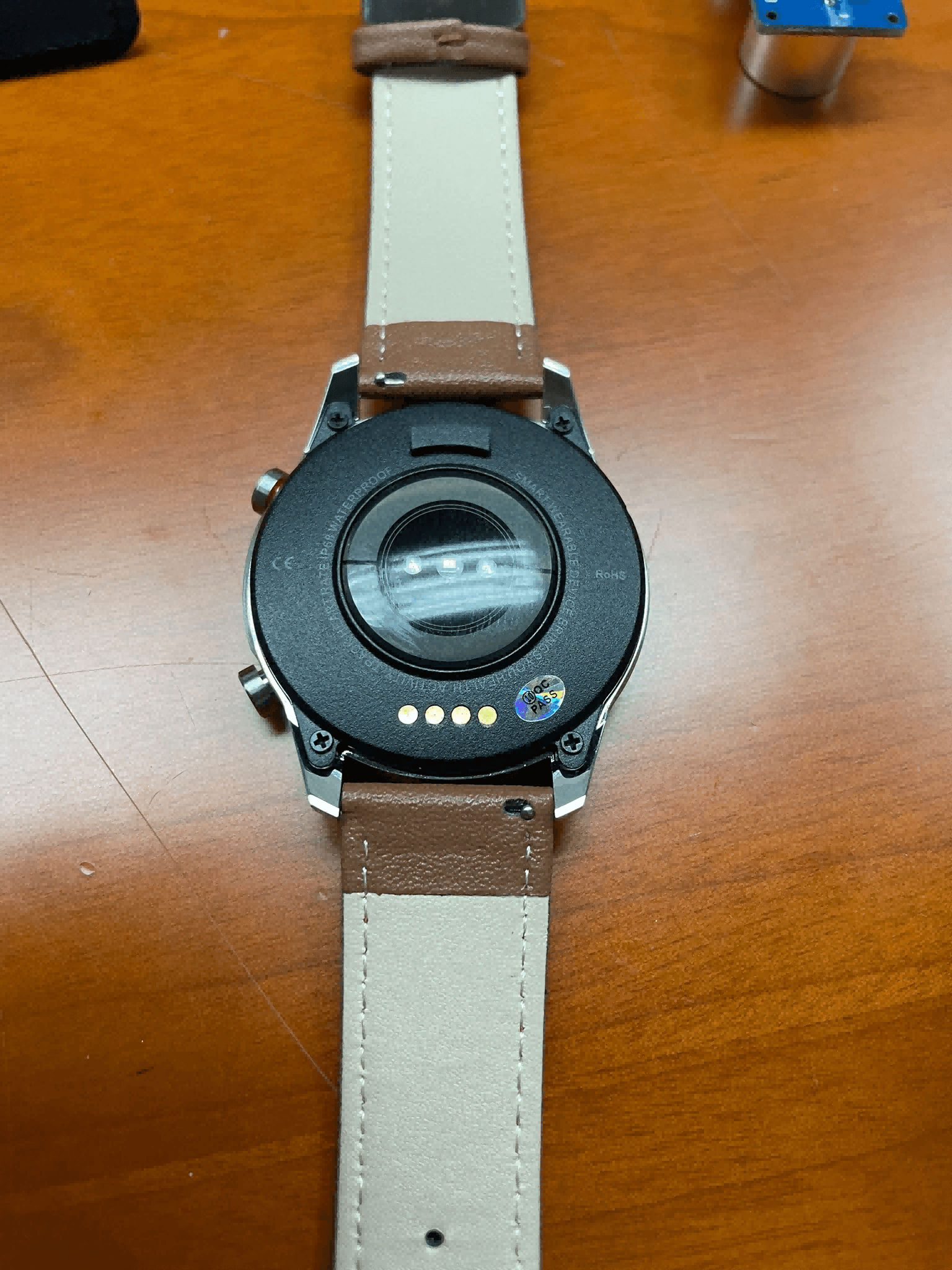
The watch is IP65-rated with wide-temperature operation for dusty, splash-prone sites; a wireless charging dock makes it easy to recharge units together after a shift.
Supports integration with existing site-safety or CMP platforms (subject to open interfaces), and can be extended per project with geofencing, reporting and work-order workflows.
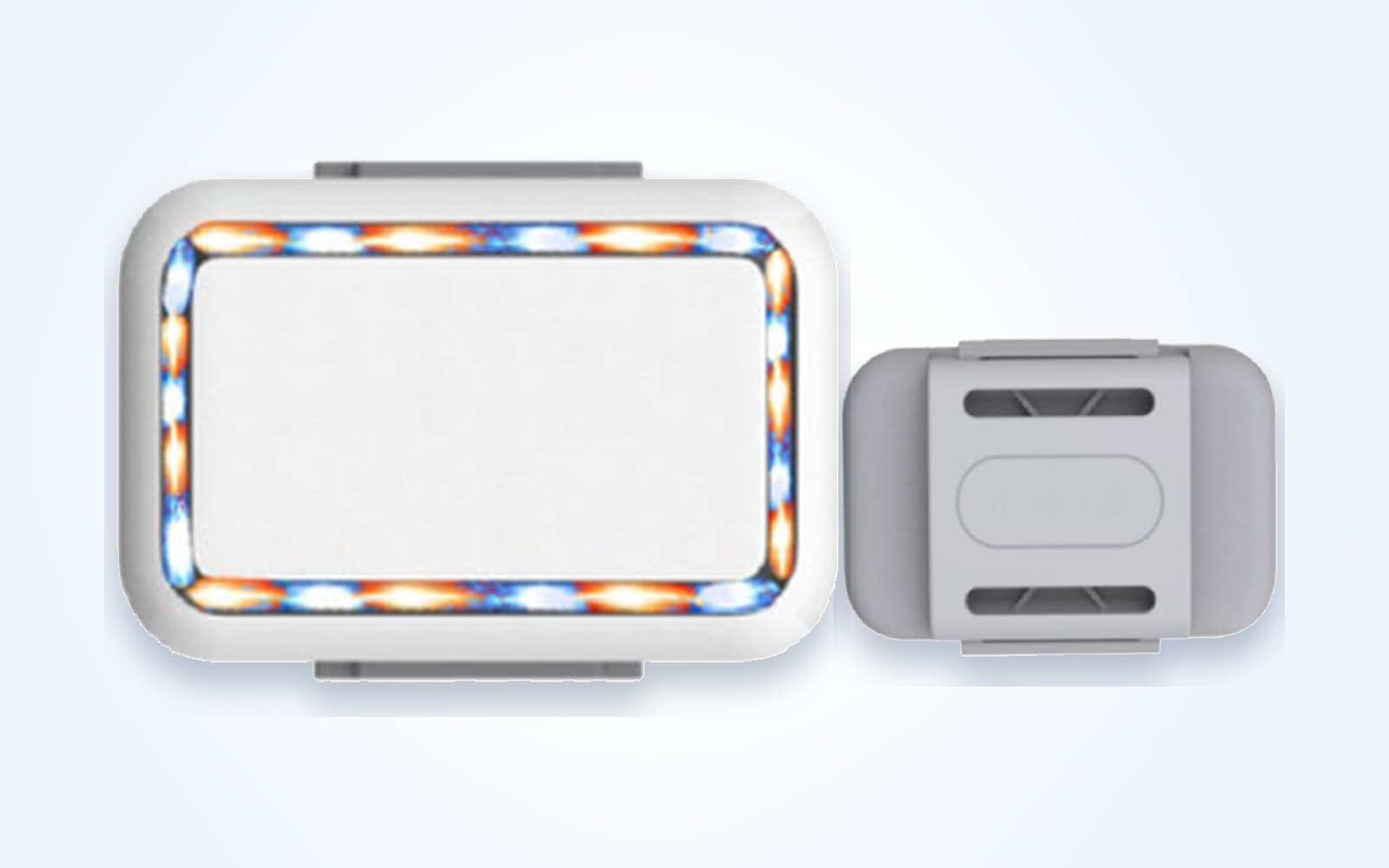
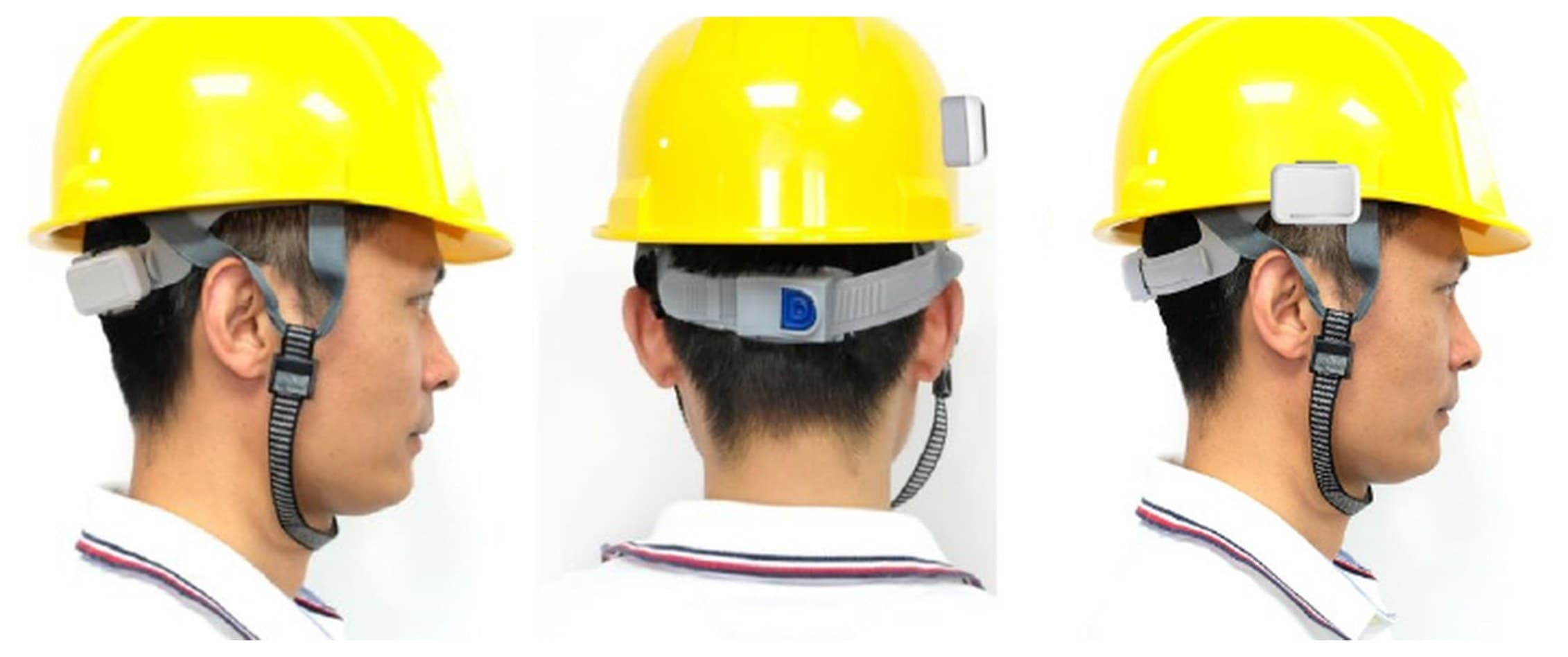
The 25 g module clips onto the rear headband, sticks to the shell or hangs from a brim hole, fitting different helmet models; IPX6 water- and dust-resistant, with a 600 mAh battery, magnetic charging and automatic low-power standby when not worn.
Outdoors it combines GPS/BeiDou with Wi-Fi and cell-tower positioning; in basements, tunnels and other indoor areas it scans Bluetooth beacons, with AOA or UWB available for higher accuracy.
Draw polygon geofences on the platform map and set entry alerts for danger zones and exit alerts for the site separately; alerts fire on crossing events and are pushed to the web and mobile.
See who entered a geofence within a time window, with first-entry and last-exit times, and export the list to Excel; history tracks can be replayed for after-the-fact review.
Unify people, plant and environment across your construction sites: digital permit-to-work (PTW), a live alert centre, AI cameras, confined-space and toxic-gas monitoring, IoT wearables, territory-wide 3D positioning and patrol/attendance — deployed on real Hong Kong contractor sites.
A digital permit-to-work system for Hong Kong sites: PTW workflows with e-signatures, gas-check records, and optional linkage to access control and CCTV.
Double protection for confined-space works: in-shaft sensors continuously measure O₂, CO, CO₂, H₂S, CH₄, temperature/humidity and PM2.5, mirrored on a shaft-top LED readout with sound-and-light alarms, while an AI facial-recognition camera logs each worker's identity and certificate status at the entrance — all managed centrally on a cloud CMP over 4G.
The W300G is an industrial 4G Cat.1 safety watch that sends heart rate, SpO₂, body temperature, SOS, fall and location data over the mobile network straight to the New Forward SSSS smart site-safety platform — with no receiver gateway to install on site. A built-in speaker and vibration bring alerts and supervisor messages right to the worker's wrist; suited to construction sites, heat-stress work and lone working.