
Wi-Fi or 4G cloud uplink
Gateways upload data over Wi-Fi or a built-in 4G LTE module; the 4G option uses a customer-supplied SIM, ideal for sites or remote plant rooms where fixed-line cabling is impractical.
BLE/BT5.0 sensing · Wi-Fi/4G cloud uplink · confined-space & site safety
BLE/BT5.0 wireless sensing with industrial gateways and cloud monitoring over Wi-Fi or 4G — built for site, drainage and confined-space safety.
Download datasheet (PDF)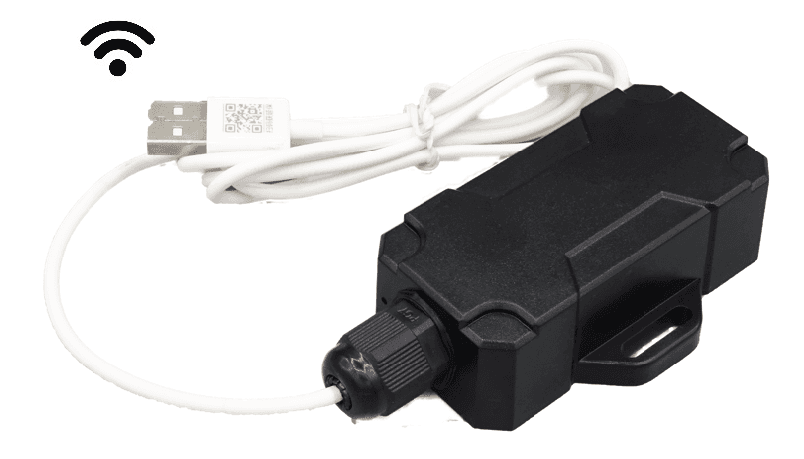
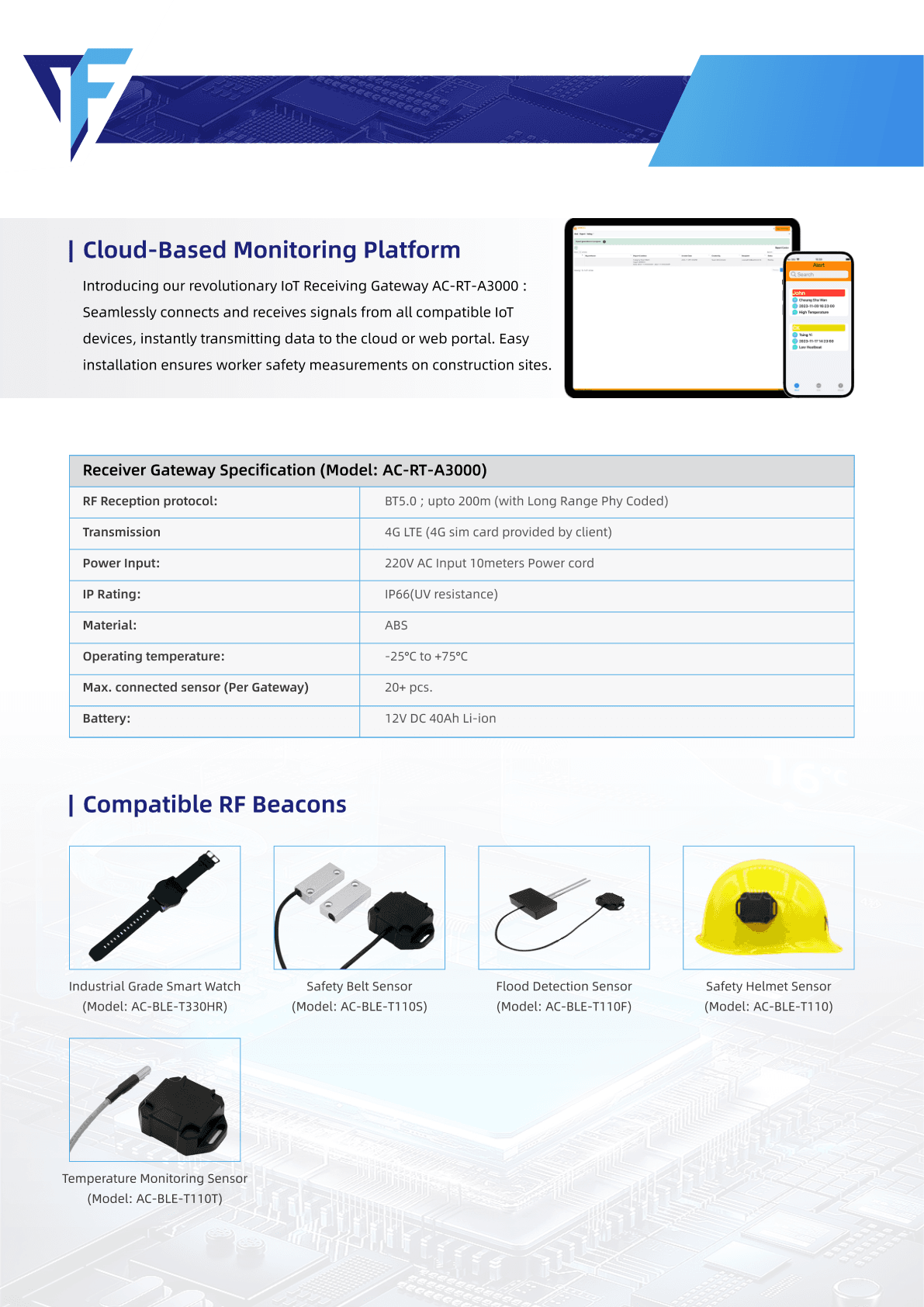
- Depending on the project model and antenna configuration, the RF receiver supports Bluetooth 5.0 and the Long-Range coded PHY, reaching up to roughly 200 m in open conditions (actual range depends on obstacles, interference and mounting height).
- A single gateway connects 20+ sensor nodes, and external / extension receiving antennas can push the sensing edge into tunnels, manholes, chambers and other enclosed or semi-enclosed spaces to improve coverage.
- Selected industrial gateways carry a high-capacity lithium-battery backup that keeps them running for several days through brief outages or temporary power, making them ideal for mobile site deployment; with 220 V plug-and-play, they resume operation the moment power is restored after relocation.
- The hardware uses a UV-resistant ABS enclosure rated IP66, with an operating range of about −25°C to +75°C for outdoor and harsh field conditions.
- The platform accepts smart watches / wearable beacons (e.g.
- abnormal body-temperature and heart-rate alerts), safety-harness sensing, smart-helmet modules, water-ingress / flooding detection and temperature probes, and can take in third-party devices via open I/O — serving as the foundation layer for toxic-gas and confined-space monitoring, equipment-status and environmental monitoring, and integrating readily with existing ELV / management platforms.
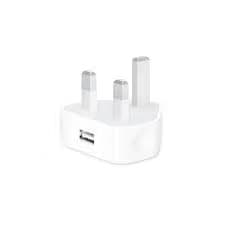
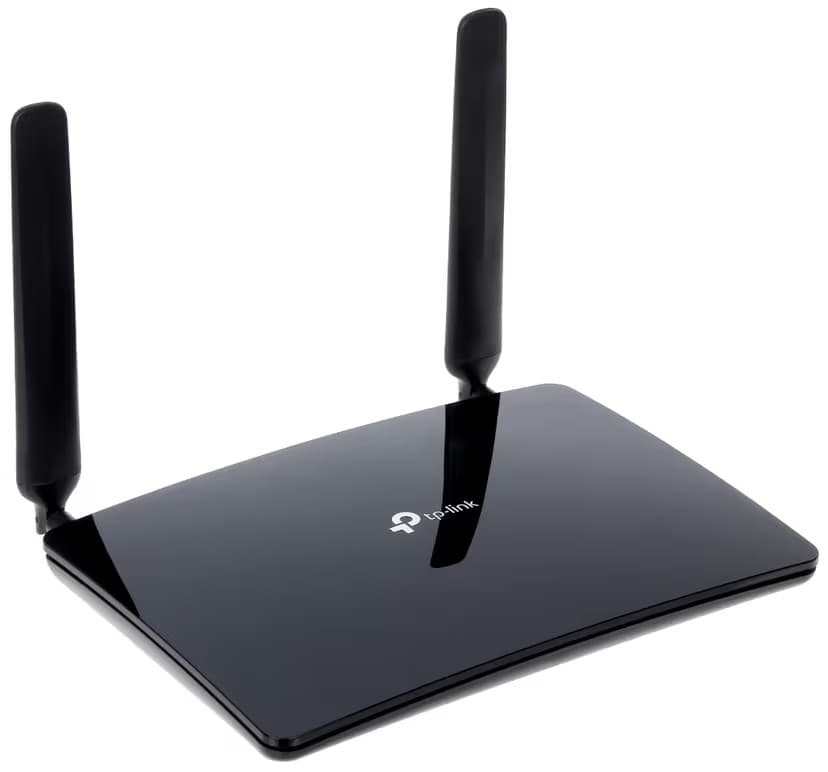

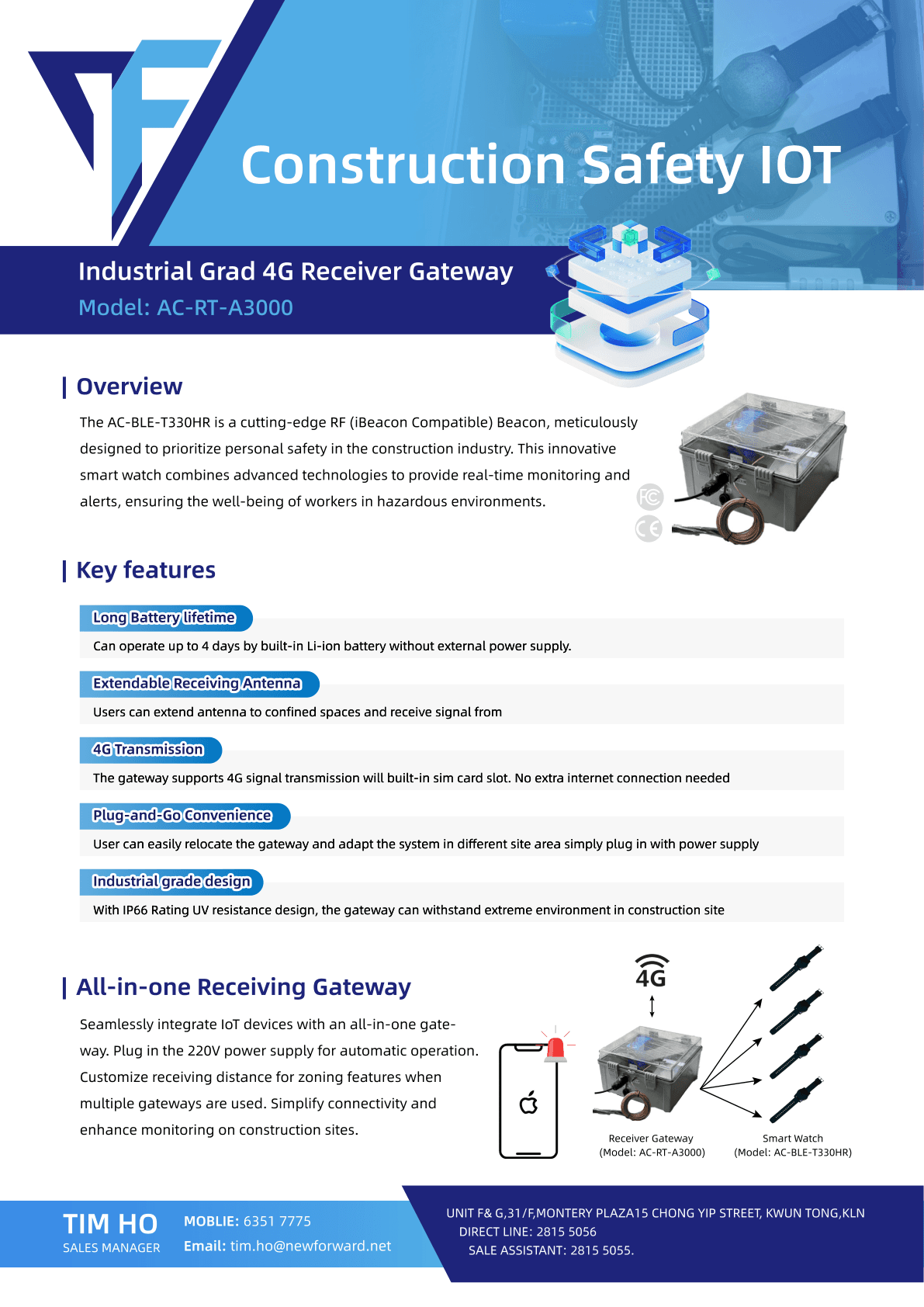
Gateways upload data over Wi-Fi or a built-in 4G LTE module; the 4G option uses a customer-supplied SIM, ideal for sites or remote plant rooms where fixed-line cabling is impractical.
Supports Bluetooth 5.0 and the Long-Range coded PHY, with reception up to roughly 200 m in open conditions (site-dependent), and zone- or geofence-style logic.
Industrial gateways can carry a built-in lithium battery that keeps them running for several days during outages; receiving antennas extend into confined spaces to improve coverage in deep shafts, chambers and similar locations.
A single gateway connects 20+ sensor nodes — wearable alerts, harness / helmet modules, water-ingress and temperature probes — and the cloud interface shows live personnel alerts such as abnormal body temperature or heart rate.
IP66, UV-resistant, wide-temperature −25°C to +75°C, with 220 V plug-and-play power for long-term deployment on sites and outdoor plant environments.
Reserves open I/O and protocol interfaces so third-party sensors or existing systems can be assessed for integration, meeting bespoke requirements.
Unify people, plant and environment across your construction sites: digital permit-to-work (PTW), a live alert centre, AI cameras, confined-space and toxic-gas monitoring, IoT wearables, territory-wide 3D positioning and patrol/attendance — deployed on real Hong Kong contractor sites.
A digital permit-to-work system for Hong Kong sites: PTW workflows with e-signatures, gas-check records, and optional linkage to access control and CCTV.
Double protection for confined-space works: in-shaft sensors continuously measure O₂, CO, CO₂, H₂S, CH₄, temperature/humidity and PM2.5, mirrored on a shaft-top LED readout with sound-and-light alarms, while an AI facial-recognition camera logs each worker's identity and certificate status at the entrance — all managed centrally on a cloud CMP over 4G.
Industrial BLE watch/band with heart rate, skin temperature, SOS, fall detection and 4G-gateway cloud alerts — built for confined-space, high-risk work. On the helmet, a 25 g tracker module adds indoor/outdoor positioning over 4G, with geofence alerts and roll call on the New Forward SSSS platform.