
No mains power, no cabling
Solar power and 4G backhaul — no mains, fibre or fixed broadband. Insert a SIM to go live, then remove and redeploy on the next site when the works end.
Kit model OK-PR02-SP-4G · 4 MP IP66 pan-tilt camera · 40 W solar panel + 30 Ah lithium battery · registers to your NVR over 4G · no mains power, no cabling
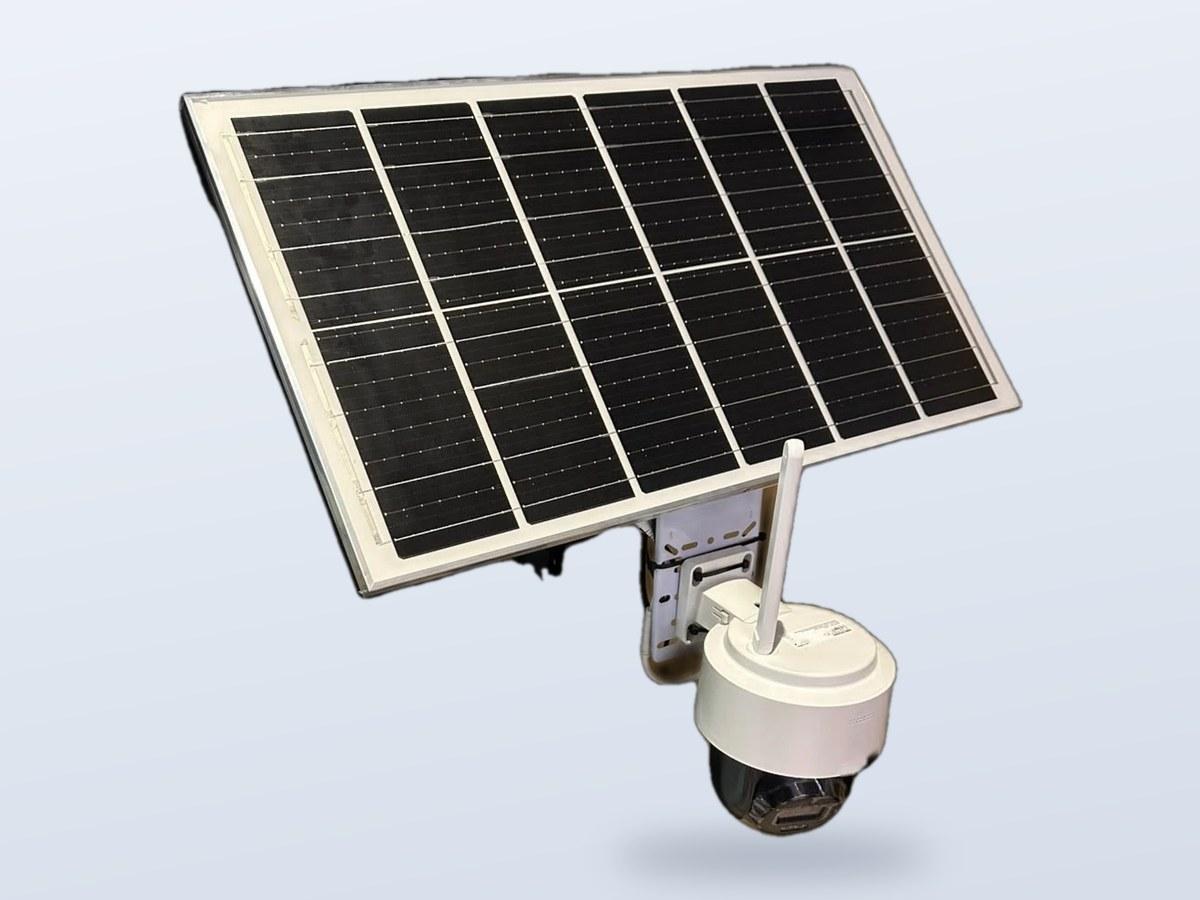
A 4 MP IP66 outdoor pan-tilt camera with built-in 4G, powered by a 40 W solar panel and 30 Ah lithium battery. Camera and solar kit form one assembly that mounts on a pole, wall or tripod in a single step. The camera registers itself to your central NVR over 4G and pushes video there for recording — no fixed-IP SIM needed on site — and can also be viewed on phone or PC. No mains power and no network cabling; built for construction sites, remote and rural sites, road and drainage works, ponds and farms, car parks and temporary works.
Download datasheet (PDF)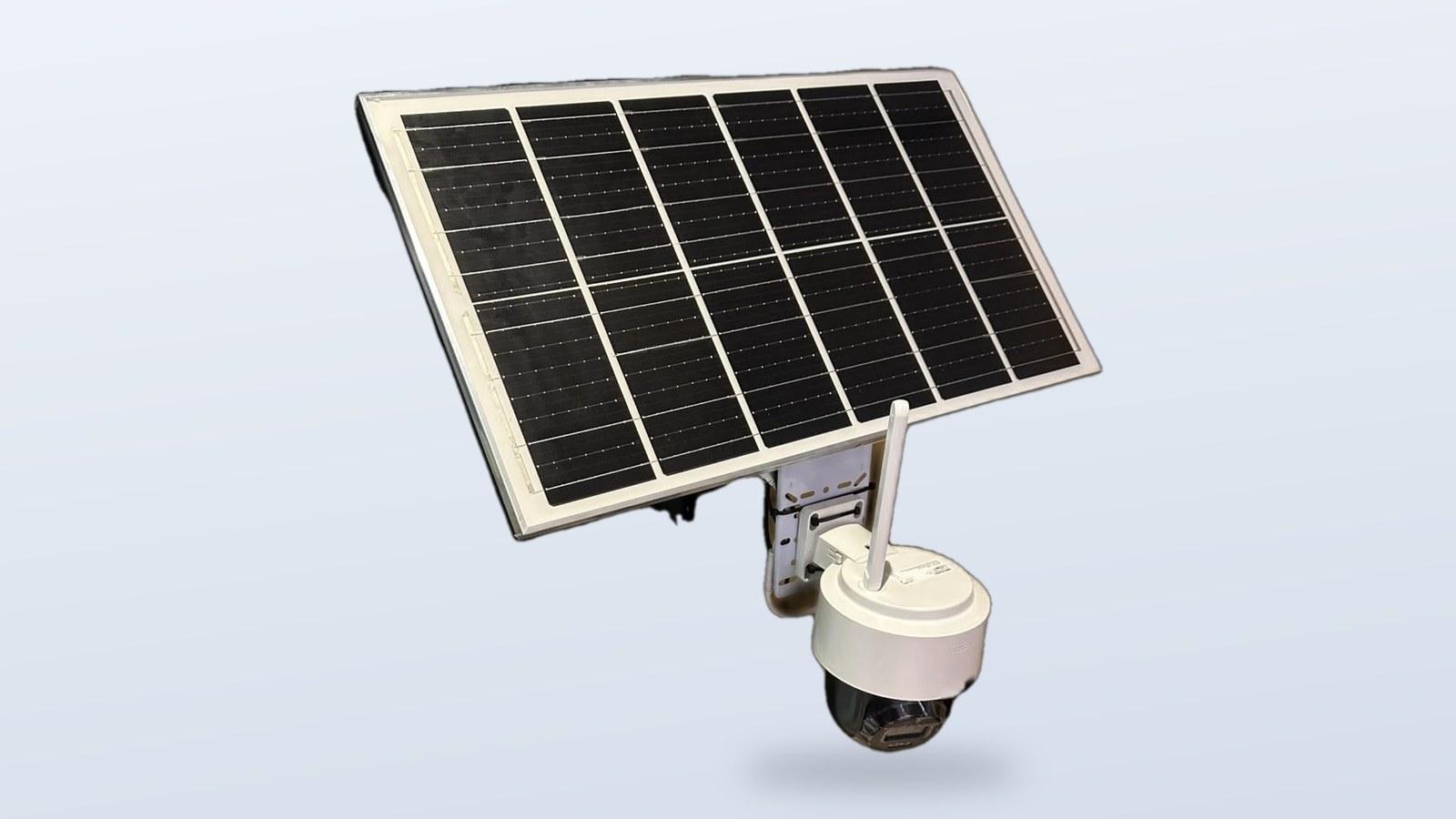
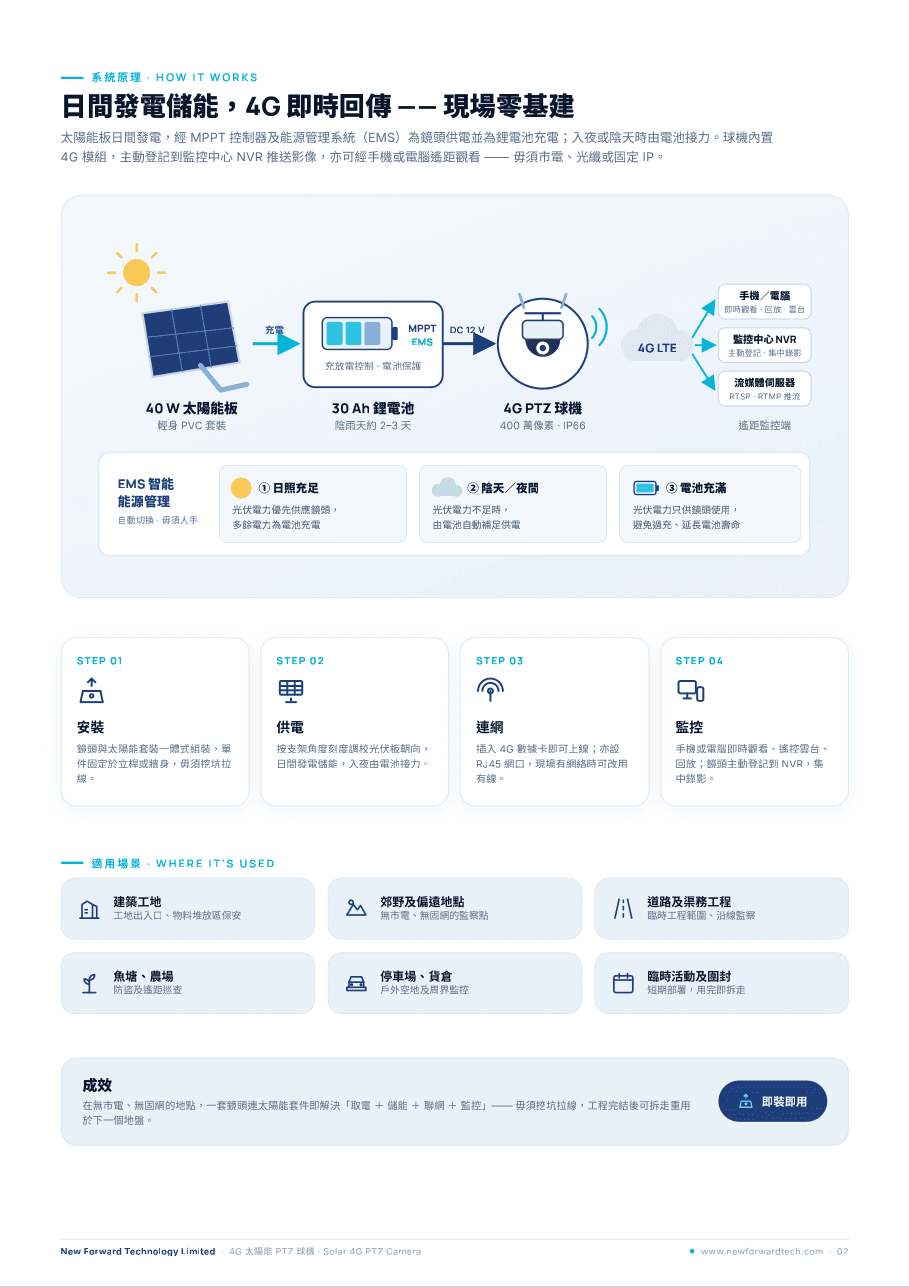
- The New Forward Solar 4G PTZ Camera (kit model OK-PR02-SP-4G) assembles a pan-tilt camera and a lightweight solar kit into one unit, fixed to a pole, wall or tripod in one step.
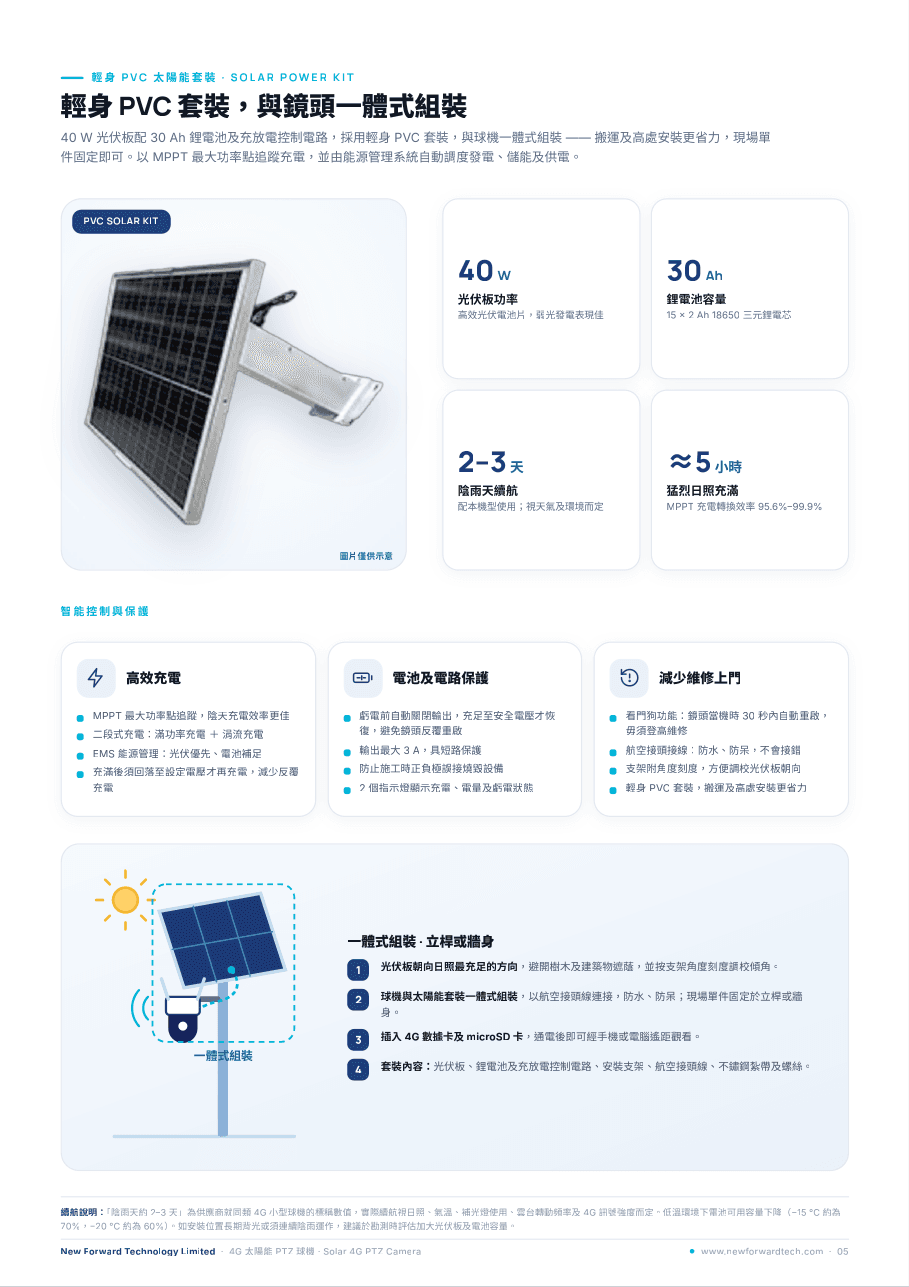
- By day the 40 W panel powers the camera first through an MPPT controller and energy management system (EMS), with surplus charging the 30 Ah lithium battery; at night or on dull days the battery takes over automatically.
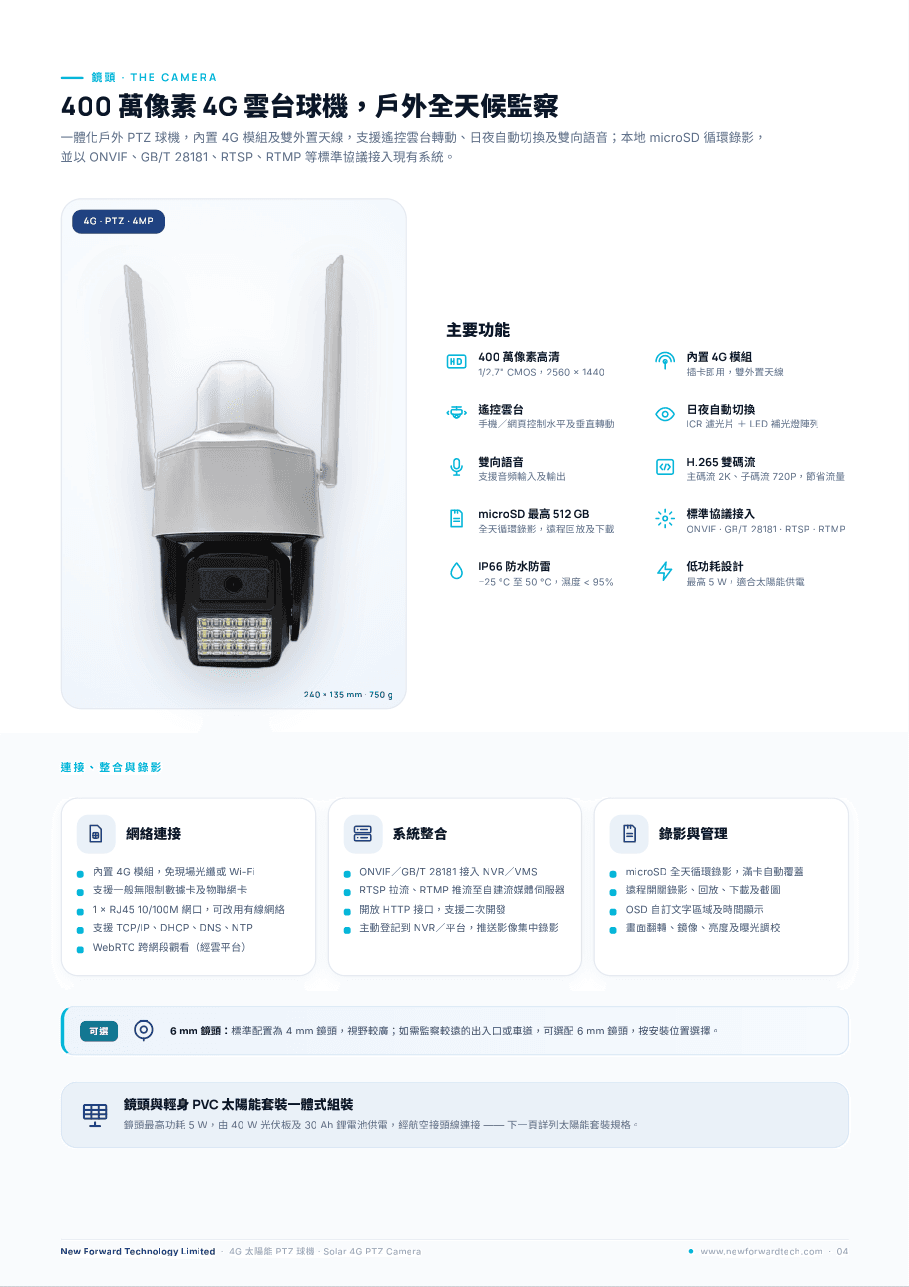
- The camera is 4 MP (2560 × 1440) with a 1/2.7" CMOS, remote pan and tilt, ICR day/night switching with an LED illuminator, two-way audio and H.265 dual streams, and draws 5 W at most — well suited to long-term solar operation.
- It connects to existing NVR/VMS over ONVIF, GB/T 28181, RTSP and RTMP; an RJ45 port allows wired use where a network exists.
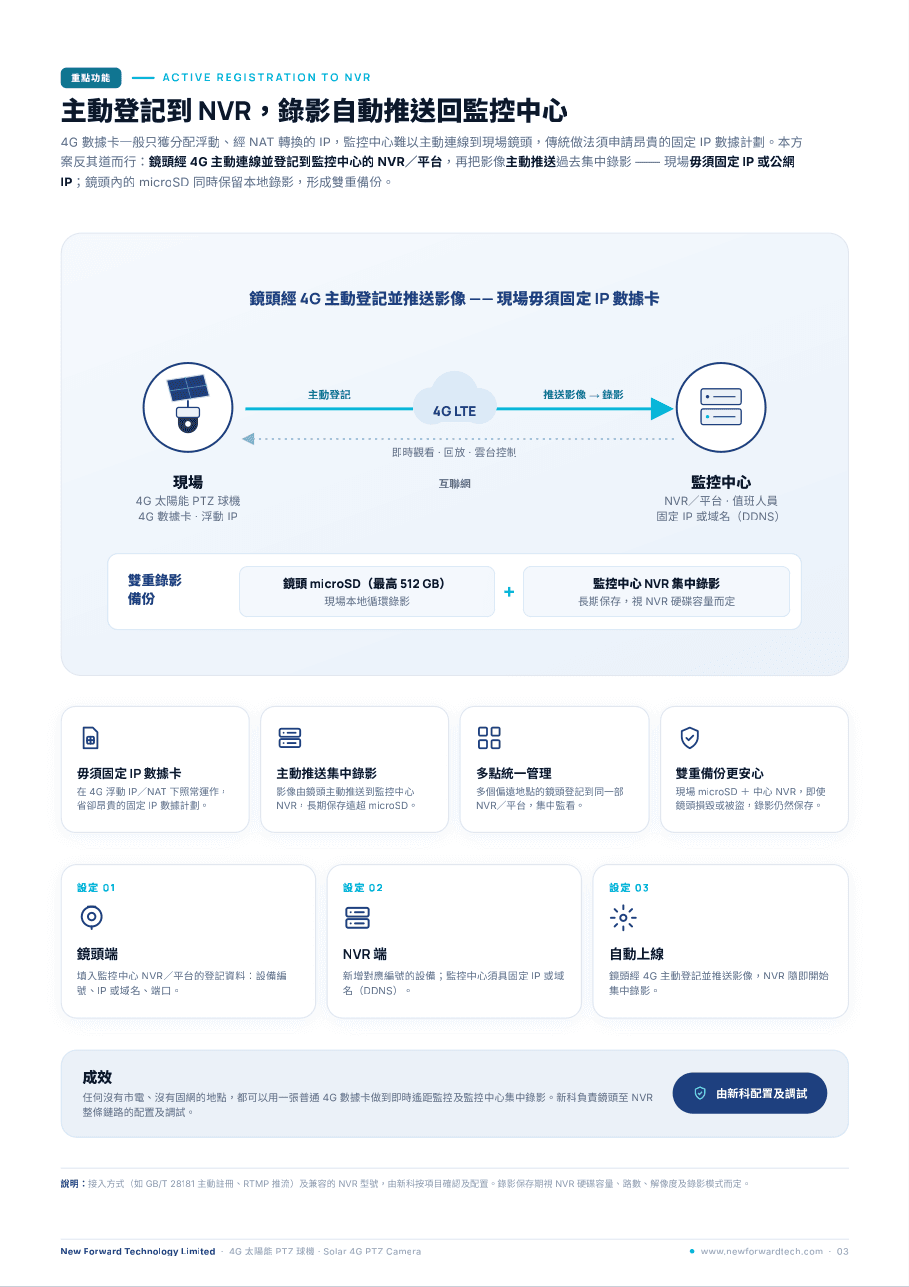
- Registers to your NVR: the camera dials out over 4G, registers itself to your central NVR or platform and pushes its video there for recording. No fixed or public IP is needed on site; only the monitoring centre needs a fixed IP or domain (DDNS).
- Dual-layer recording: the on-camera microSD (up to 512 GB) keeps a local loop recording, so footage survives at the centre even if a camera is damaged or stolen.
- Multi-site view: cameras at many remote sites register to one NVR or platform, and can also be viewed, played back and steered on phone or PC.
- Dependable runtime: about 2–3 overcast days with this camera and around 5 hours to full charge in strong sun; low-voltage cut-off, mis-wiring protection and a watchdog restart cut site visits.
- New Forward surveys and sizes each location: camera angle, panel orientation and battery size.
- Pole or wall installation, 4G activation, mobile app and NVR/platform integration; the connection method (e.g. GB/T 28181 active registration or RTMP push) and compatible NVR models are confirmed and configured per project.
- Scheduled inspections, battery and panel health checks and repairs under contract; when the works end the kit can be removed and redeployed.
- For a lifting mast, a larger marine battery or a trailer-mounted mobile station, see the Rapid Deployment IP Camera System.
Solar power and 4G backhaul — no mains, fibre or fixed broadband. Insert a SIM to go live, then remove and redeploy on the next site when the works end.
MPPT charging at 95.6–99.9% efficiency and EMS (solar first, battery tops up); about 2–3 overcast days of autonomy and around 5 hours to full charge in strong sun.
The camera registers to your central NVR or platform over 4G and pushes video for recording, working behind dynamic IP and NAT without a fixed-IP data plan.
On-camera microSD (up to 512 GB) loop recording plus central NVR recording — footage survives even if a camera is damaged or stolen.
2560 × 1440, remote pan and tilt, ICR day/night switching with LED illuminator, two-way audio and H.265 dual streams to save data.
Camera and solar kit are linked by a waterproof, keyed aviation cable and fixed to a pole, wall or tripod as one unit; the lightweight PVC kit is easy to carry and mount at height.
ONVIF, GB/T 28181, RTSP and RTMP into existing NVR/VMS or your own media server, plus an open HTTP API for custom development.
IP66 and lightning protection, −25 °C to 50 °C; low-voltage cut-off, mis-wiring guard and a watchdog that restarts a hung camera within 30 s — fewer site visits.
AI-powered video analytics for proactive monitoring across commercial, industrial, government, and public environments.
ELV design and deployment for IP/analogue CCTV, access control, and intercom, with optional video walls and AI analytics.
DSS Professional-based platform for unified video, access, intercom, alarms, POS, radar, and AI operations across multiple sites.
A self-contained, solar-powered 4G surveillance sentry: camera, mast, solar power, energy storage and 4G networking integrated into one rapidly deployable unit that one person sets up and raises in about two minutes — no trenching, fibre or mains power. It carries a Dahua DH-P3AE-PV-4G 3 MP AI pan-tilt camera with human/vehicle detection, smart dual illumination and active sound-and-light deterrence, and runs 2+ days off-grid on solar and a 12 V marine battery — ideal for remote/off-grid, construction, marine floating platforms and temporary/event sites.